There are so many new adaptive instruments thanks to technology and the growing fields of occupational therapy and adaptive music education. Today’s blog post covers some instruments that are not always thought of as adaptive instruments, but function well in adaptive music settings and are readily accessible at a local music store at an affordable price.
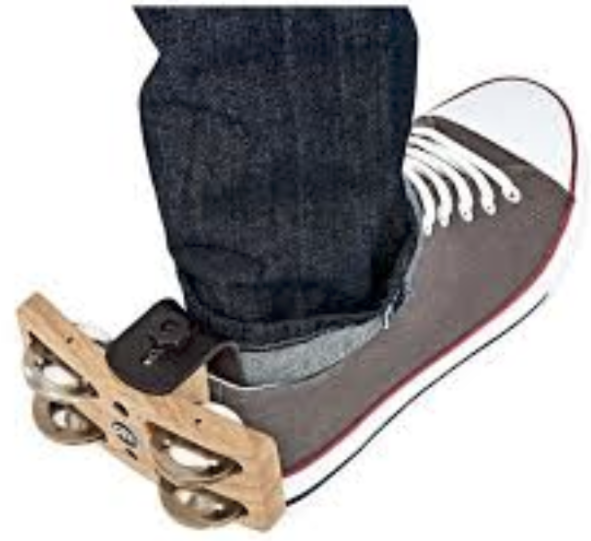
Heel tambourines are often used by folk musicians who are playing the guitar or fiddle at the same time. They work well for students with low upper body motor skills and or grip strength. The tambourine fits into the back of the shoe, like a shoe horn, and the musician can tap their toe to play along with the music! Heel tambourines are also a great tool for students who are developing the motor skills needed to play a drum kit.
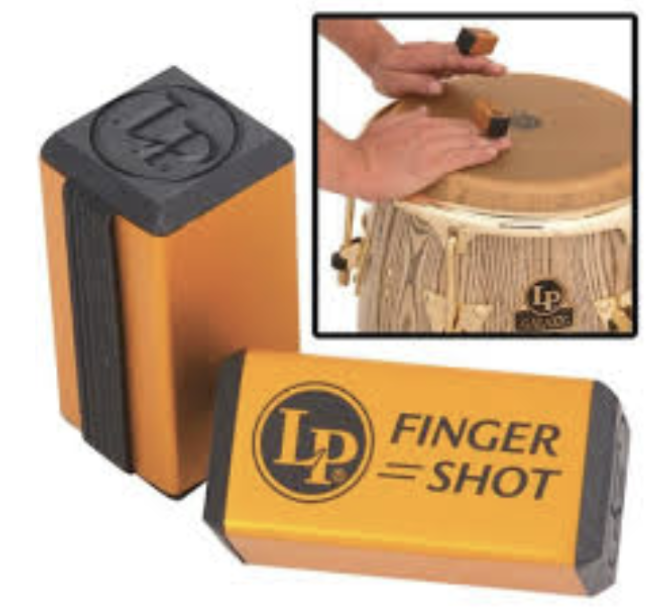
A finger shot is a miniature shaker that slides on to your finger with a small elastic band. These were originally created for percussionists playing hand drums, like the bongos or cajon, to add additional timbres. They work well for students who don’t have the hand strength to hold a shaker instrument. The musician can tap their hand with the finger shot on and join the band!
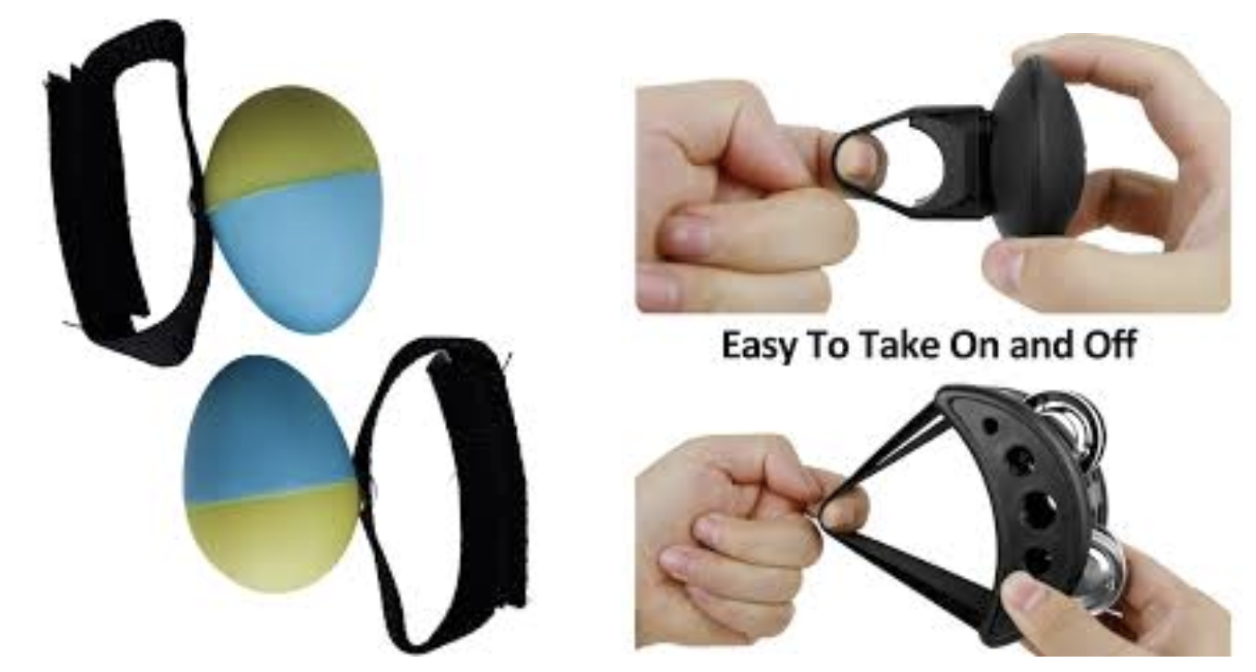
There are several options for percussion instruments with elastic bands fastened to them. The strap slides easily onto the outside of a shoe and the user can tap their toe with the beat of the music. These work just as well strapped to the wrist, and the musician can shake along with the music.
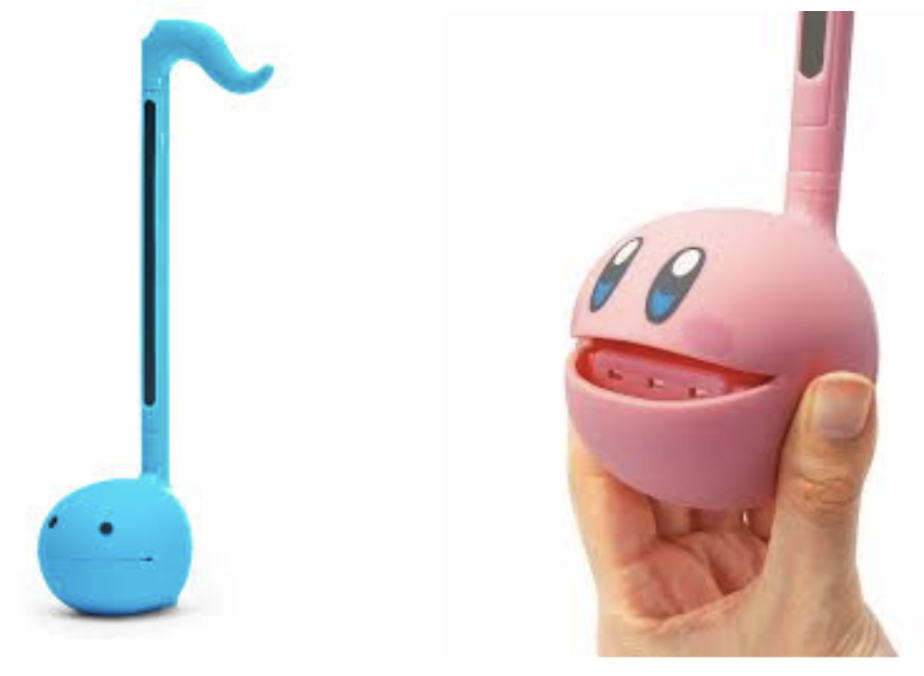
The otamatone is a silly, quirky instrument made in Japan. It’s battery operated with a small speaker inside the “mouth” of the instrument. You play the instrument by sliding your fingers up and down the neck of the instrument which plays a diatonic scale. You can change the timbre of the sound by squeezing the “mouth” of the otomatone which is soft like a stress ball. These come in many sizes, including key chain size, as well as multiple character themes. While the otomatone is sure to get a laugh in a lesson (I have yet to meet a child that doesn’t enjoy them), it also helps to teach pitch direction. Students can hear the notes getting higher as they move their fingers vertically up the instrument.
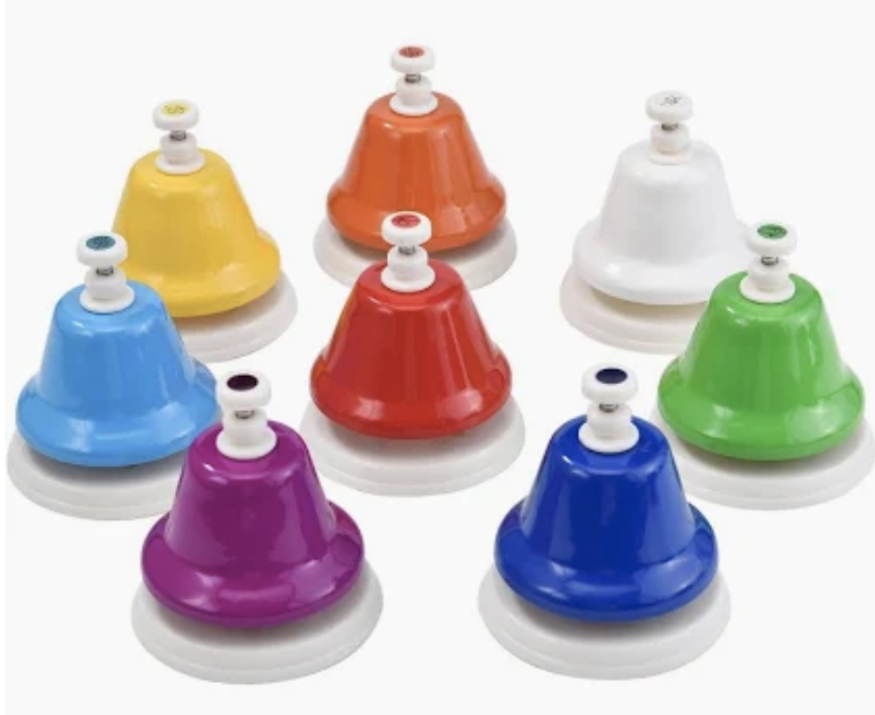
Colourful handbells are an excellent addition to any studio. Bells work great for building ensemble skills in a group setting, and require almost no skills to begin to play! If you use
coloured solfege cards or coloured music notation, the colours of the handbells match that of boomwackers or coloured solfege cards. This button activated bell set works great for students with low grip strength, or hypertonia.
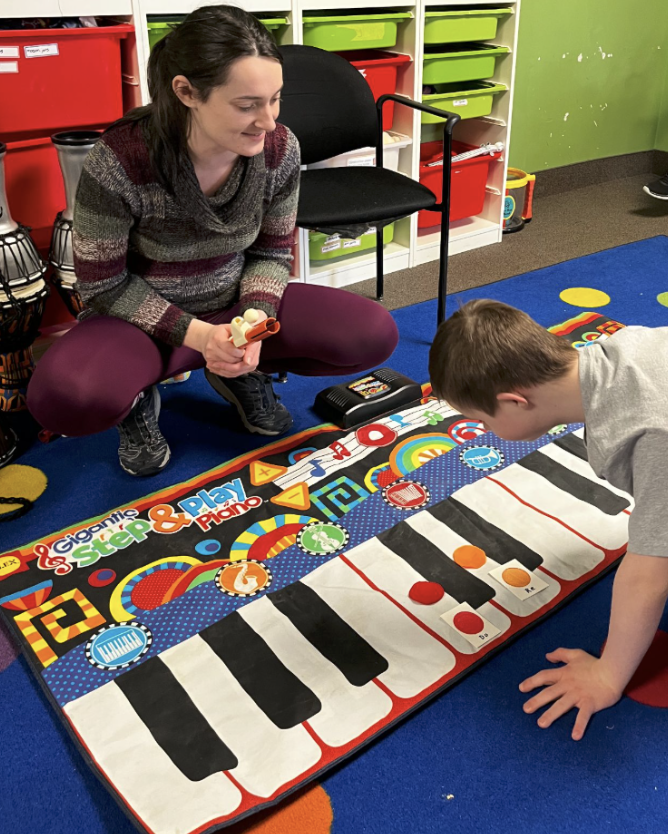
Roll out floor pianos are great for students who need to move and are an excellent resource for multimodal teaching! Teach the basics of keyboard geography while engaging kinaesthetic, aural, and visual learning. Students who perhaps don’t have the core strength to sit at the piano, or are still developing their fine motor skills, can engage with the oversized keyboard and play it with their hands or their feet. The roll out piano mat works great when working with a larger group of students in a classroom setting where a keyboard is not available.
All of these instruments are ones that require no set up or new skills. While there are plenty of specialized adaptive instruments and technology based instruments, which we will discuss in future blogs, these instruments are all accessible and affordable, and are hopefully helpful in your adaptive music teaching journey.
Happy Teaching!