Over the last decade of my music teaching journey, I have had the privilege of working with several students with different musculoskeletal and neuromuscular disorders. I believe every student has the right to learn and participate in music in any way they can, and I have learned alongside my students different adaptations that make it easier for them to learn, move, and improve their overall enjoyment of music lessons and classes. Just as we wouldn’t expect a student with a broken arm to play hands together at the piano, we don’t expect a movement from a student that may be painful or not even possible as a prerequisite for their music learning.
While there is a range of ability within different diagnoses, these conditions may affect students' posture, response to musical stimulus, range of motion, and sense of touch at the instrument. We often see things such as muscle atrophy, pain with a certain movement or held posture, involuntary movement, and difficulty with coordination and balance. Students’ symptoms may vary from day to day and also change over their lifetime. The most important thing we can do as teachers is to adapt to the student’s skills and ability for that day, and meet them where they are with kindness and mutual respect.
But what can that look like practically speaking? Here are some examples from my teaching practice:
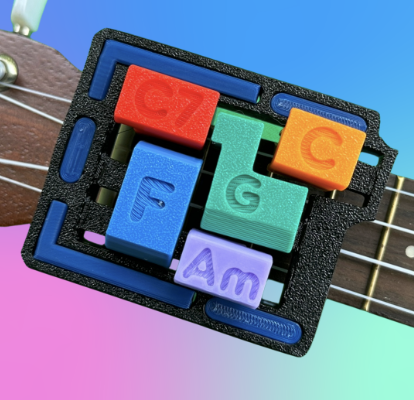
I have a student with a neuromuscular condition that affects their hand coordination from day to day. This might look like involuntary spasms, a reduced range of motion or involuntary contraction of the fingers and hand. However, this student loves to play the ukulele. One adaptation we have made is that if the student is not able to hold a ukulele chord that day, I finger the chord and the student strums along. I have also recently learned about a “UkeAssist” which is an adaptive aid you can place on the neck of the ukulele and press a button that will then hold down the chord for you. The student still chooses the music we are learning and sets the tempo, but lets me know if they are unable to chord that day, or if they are experiencing pain or fatigue, and I can step in to support them.
As a choral instructor, I have had several students whose disability prohibits them from having what is often labelled in vocal pedagogy as “correct” or “good” posture with feet shoulder width apart, shoulders back and down, and neck in an upright position supporting the head. While, yes, when we sing, we want to keep the air way as unobstructed as possible, notions of “correct” often prohibit musicians with disabilities from participating. I believe everyone has the ability to sing, but it may look and sound different for each person. Trust that a student knows their capacity. When discussing posture in choral and voice lessons, I aim to use inclusive language for the participants in my group. I have several students for whom an “upright posture” during vocal lessons or choir is not possible. Singing with their back against a chair, or in a somewhat slouched position, is sometimes the most supported stance they can bring. My job is to find ways to support them in that. Some adjustments we make are taking more frequent breaths within the song, adjusting the length of a held note, keeping the vowel shapes as open as possible to support resonance, or having a music stand to hold up their music in choir. If a student takes a seat in choir while everyone else is standing, I respect their decision and trust that they are listening to their body’s cues.
When teaching a music and movement class or a class during which a variety of movement is required, I try to accommodate and demonstrate different movements throughout each activity, showing that there are a variety of ways you can move and participate. For example, if a song has a line that says “stomp your feet,” but I have wheelchair users in the class, I might say “pat your legs” or “clap your hands.” If an action in a song is “stretch to the sky,” but a student doesn’t have full use of their upper body, I might say “look to the sky” as an alternative phrase. If we are doing a “marching song” (like Laurie Berkner’s “We are the Dinosaurs”), I might have students “march with their hands” by tapping their legs in a left-right pattern. I also aim to change up the type of movement required for each activity, so students who may fatigue easily using one part of their body can still engage through a different activity without necessarily needing a break.
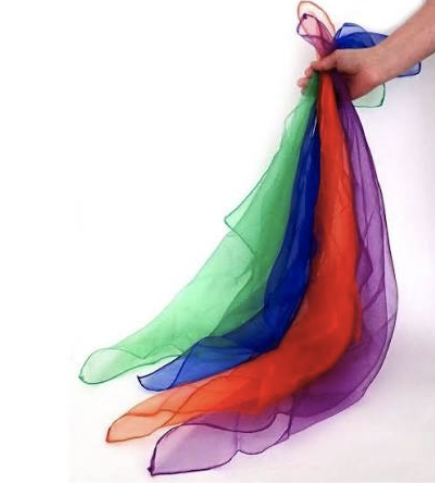
I love using sensory scarves as a way to engage movement in a music and movement class. The scarf acts as a light, flexible, and colourful extension of a student’s body. Students can have it tied to their wrist like a bracelet, hold it in their hands, or some of my students even have them attached to their wheelchairs and will move the scarf to the music.
When working with students with different neuromuscular and musculoskeletal conditions, we must respect their sense of autonomy when choosing movement. Remember that learning an instrument can happen through many ways of engagement. As adaptive music teachers, we want to foster an environment where all students are welcomed and included just as they are. Posture, movement, and engagement may look different for these students from week to week, but our support of their learning remains steady.
Happy Teaching!